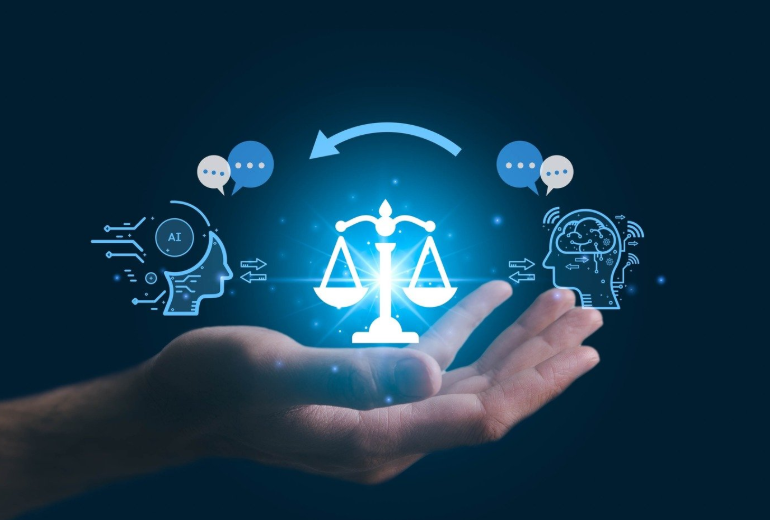
The distinction between Artificial Intelligence, Machine Learning, and Deep Learning is critical for understanding modern technological applications. AI serves as the overarching framework, while Machine Learning focuses on algorithms that enable systems to learn from data. Deep Learning, a subset of Machine Learning, employs neural networks for more complex tasks. Each layer adds depth to the capabilities of machines. However, the implications of these technologies extend far beyond mere definitions, raising questions about their future impact.
Understanding Artificial Intelligence (AI)
Although the term “artificial intelligence” often evokes images of advanced robots or futuristic technologies, its foundational concept encompasses the development of algorithms and systems that enable machines to perform tasks typically requiring human intelligence.
The impact of AI applications spans various sectors, raising important considerations regarding AI ethics, limitations, and future advancements.
Notable AI examples illuminate these dimensions, shaping society’s evolving relationship with technology.
See also: lafiliere
Exploring Machine Learning
Machine learning, a subset of artificial intelligence, enables systems to learn from data and improve their performance over time without being explicitly programmed for each specific task.
It encompasses supervised learning, where algorithms are trained on labeled datasets, and unsupervised learning, which identifies patterns in unlabeled data.
These methodologies empower machines to autonomously enhance their decision-making capabilities, fostering innovation and efficiency across various domains.
Delving Into Deep Learning
Deep learning represents a sophisticated advancement within the field of machine learning, characterized by its use of neural networks that mimic the human brain’s architecture.
This approach excels in feature extraction, autonomously identifying patterns from vast datasets. By layering multiple processing units, deep learning systems enhance accuracy and efficiency, empowering applications ranging from image recognition to natural language processing, thus redefining the boundaries of artificial intelligence.
The Interconnections Between AI, Machine Learning, and Deep Learning
Artificial intelligence (AI), machine learning (ML), and deep learning (DL) form a hierarchical framework where each component builds upon the previous one, leading to increasingly sophisticated capabilities.
AI applications leverage ML algorithms, while DL architectures utilize complex ML models.
This interplay addresses AI ethics and evolving AI trends, though it also presents ML challenges that necessitate innovative DL techniques for effective solutions.
Conclusion
In summary, the relationship between AI, machine learning, and deep learning resembles a multi-tiered cake, where each layer builds upon the foundation laid by the one below it. As AI continues to evolve, machine learning refines its capabilities, while deep learning pushes the boundaries of what is possible. Together, these technologies not only enhance computational efficiency but also unlock unprecedented innovations, paving the way for a future where intelligent systems seamlessly integrate into everyday life.